Definition and Foundations: What Are Neuroeducational Games?
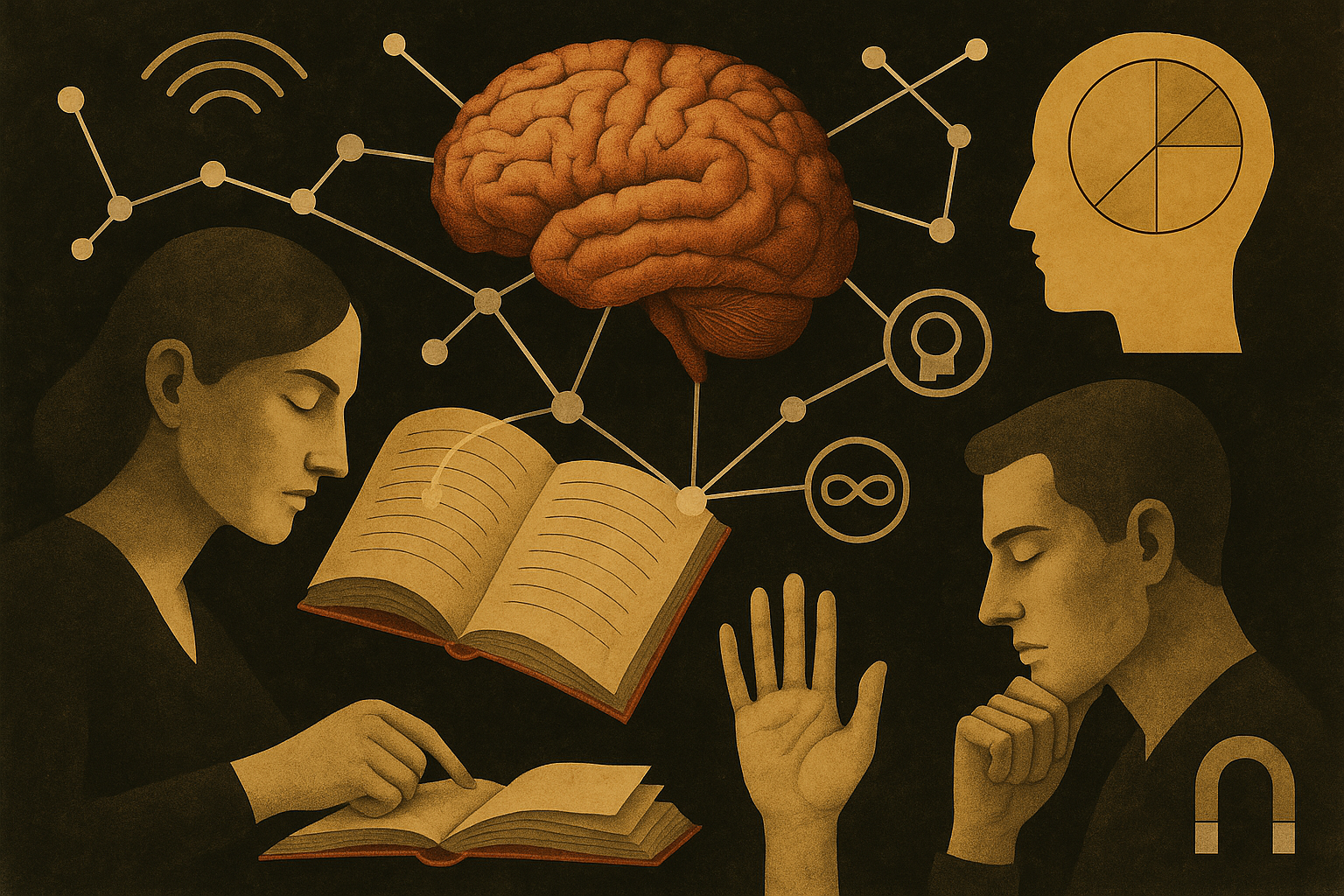
At the nexus of neuroscience, psychology, and pedagogy, a transformative field known as neuroeducation is emerging, aiming to optimize teaching processes by applying knowledge of how the brain works.1 Within this framework,
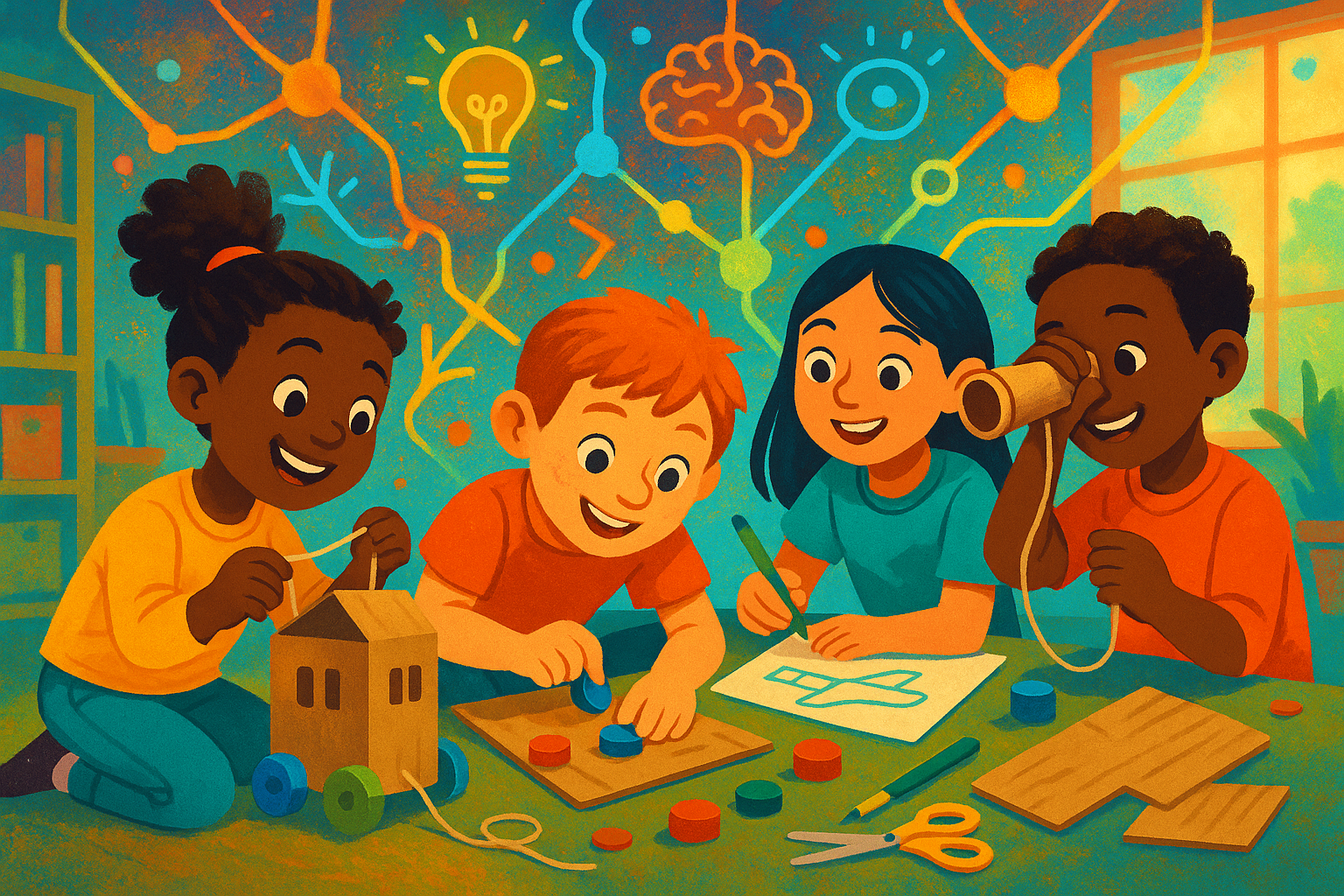
neuroeducational games are defined as intentional, multisensory activities designed to engage multiple senses simultaneously to promote fundamental brain processes for playful learning, such as synapsis, motivation, and the activation of the reward system.4
The cornerstone of neuroeducation is brain plasticity in children—the brain's inherent ability to change its structure and function in response to experience.5 Every time we learn something new, our brain creates and strengthens neural networks. Neuroeducational games act as catalysts for this process, not merely by being entertaining, but by being deliberately designed to activate the brain mechanisms that support learning.5
A distinctive feature of these games is their multisensory nature. Research has shown that learning is more robust when information is encoded through multiple sensory pathways.7 A game involving touch, sight, and hearing creates a much richer neural network than a purely visual or auditory activity.2 This integration of stimuli forces the brain to connect information from various areas, strengthening synapses more deeply.8Therefore, play is not a simple distraction but a biological necessity that oxygenates the brain, promotes neurogenesis (the creation of new neurons), and optimizes existing neural connections, directly impacting brain structure and functionality.9
Advantages and Benefits Proven in Scientific Literature
La literatura científica respalda de manera contundente los beneficios del juego en el aprendizaje. Su impacto abarca el desarrollo cognitivo, motivacional y socioemocional, creando un ecosistema de aprendizaje integral a través de la estimulación cognitiva.
Improved Memory, Attention, and Executive Functions
Playful learning directly stimulates brain areas associated with memory and attention. For this reason, games for memory and attention are key tools in the classroom.11 They are also particularly effective as games for executive functions—the set of higher-order skills that allow us to plan, organize, regulate emotions, and control impulses.14
Studies have shown that both board games and video games (in a controlled manner) significantly improve these abilities.16 Traditional games like chess foster strategic planning 18; puzzles enhance visual perception 18; and word searches boost selective attention.20 These activities are cognitive workouts that strengthen the neural networks responsible for critical thinking.15
Stimulating Motivation and Active Learning
One of the most important principles in neuroeducation is that "the brain needs to be excited to learn."7 Play is the perfect vehicle for generating this positive emotional state, activating the brain's reward system and releasing dopamine, a neurotransmitter crucial for motivation and memory consolidation.9
Furthermore, play promotes active learning, where the student is the protagonist of their own process.5 By making decisions and experimenting, the student develops a sense of agency that increases brain activation and improves memory encoding.24
Socio-emotional and Collaborative Development
Play is fundamental for socio-emotional development in children. It acts as an emotional regulator, allowing children to manage frustration, joy, and disappointment in a safe environment.8 Board games teach turn-taking and rule-following, essential skills for coexistence.14 On a neurobiological level, collaborative play releases oxytocin, the "trust hormone," which is essential for building healthy social relationships.25 A collaborative play environment reduces stress, which negatively affects the prefrontal cortex, thus preparing the brain for optimal learning.26
Limitations and Challenges: A Critical and Realistic Look
A pesar de sus beneficios, es imperativo abordar los juegos neuroeducativos con una perspectiva crítica, reconociendo sus limitaciones, especialmente en el ámbito de la gamificación educativa y el uso de tecnología.
Risks of Overstimulation and Digital Dependence
Excessive use of video games can lead to a sedentary lifestyle, social isolation, and addictive behaviors.27 Prolonged screen time can negatively affect sleep and mental well-being.29 Additionally, online games expose minors to inappropriate content and cyberbullying.29
The Limitations of Gamification in Education
La gamificación, o el uso de elementos de juego en contextos no lúdicos, a menudo se implementa de manera superficial.31 Una de las críticas más sólidas se dirige a la “gamificación retórica”, que se limita a añadir puntos e insignias, generando una motivación extrínseca y pasajera que no fomenta un interés genuino por el aprendizaje.32 Asimismo, el campo está plagado de “neuromitos” —creencias falsas sobre el cerebro sin base científica—, por lo que es crucial que los educadores busquen evidencia sólida antes de implementar estas estrategias.13
The Digital Divide as a Barrier to Equity
Reliance on technology exacerbates the digital divide, one of the deepest inequalities of our time. Lack of access to devices and quality internet marginalizes millions of students, disproportionately affecting low-income communities and rural areas.37 Paradoxically, this limitation can lead to a more authentic neuroeducational practice, focused on human interaction rather than external rewards.
Practical and Low-Cost Solutions: Neuroeducation for All
True neuroeducation with low resources lies not in technology, but in pedagogical creativity. There are multiple strategies for teachers in vulnerable communities and parents seeking to support learning without expensive technology.
For those wondering how to make homemade neuroeducational games, the answer lies in everyday materials. Pen-and-paper games like "Stop!" are excellent for verbal fluency.26 Traditional board games like chess or checkers develop logic.18 Decks of cards can be adapted for memory and calculation games.20
En comunidades rurales, los ejemplos de juegos educativos con material reciclado son abundantes. Se pueden crear juegos de construcción con cajas de cartón, bolos con botellas de plástico o títeres con calcetines.30 El entorno natural ofrece palos, piedras y espacio para juegos sin tecnología para el desarrollo cognitivo.46 Dinámicas grupales como los juegos con cuerdas solo requieren imaginación y colaboración.48 Las actividades de neuroeducación para escuelas públicas pueden incluir hasta tareas cotidianas como limpiar el aula en equipo para fomentar la planificación y la autonomía.26
The following table summarizes some concrete examples:
| Game/Activity Name | Materials Needed | Cognitive Function(s) Stimulated | Description and Neuroeducational Rationale |
| Number Mill 26 26 | Cardboard circles, markers. | Logical reasoning, visomotor memory, selective attention. | Create spinning discs to practice multiplication tables. The combination of colors and numbers activates multiple brain areas, strengthening neural networks associated with calculation through multisensory encoding. |
| Treasure Hunt 28 28 | Everyday objects, paper clues. | Working memory, problem-solving, logical thinking. | Follow a series of clues to find a "treasure." It requires holding clues in working memory (prefrontal cortex) while planning the next steps, simulating executive function processes. |
| Emotion Theater 5 5 | None (or sock puppets). | Emotional intelligence, empathy, self-regulation, theory of mind. | Representar situaciones y emociones. Activa las neuronas espejo 39, permitiendo a los niños comprender y simular los estados mentales de otros, lo cual es la base de la empatía y la cognición social. |
| Rope Mazes 50 50 | Ropes, chalk, or sticks on the ground. | Spatial planning, gross motor skills, problem-solving. | Create and navigate mazes in the yard. This activity integrates motor planning (cerebellum) with spatial problem-solving (parietal and frontal lobes), and physical exercise oxygenates the brain.3737 |
| Memory with Bottle Caps 30 30 | Recycled bottle caps, paper, glue. | Short-term visual memory, sustained attention. | Create pairs of images or symbols under the caps. The act of remembering the location of the caps activates the hippocampus, a key brain structure for forming new memories. |
| Chained Words 22 22 | None (oral game). | Verbal fluency, auditory memory, processing speed. | One player says a word, and the next must say another that begins with the last syllable or letter. This quick exercise strengthens connections in language and working memory areas. |
Critical Conclusion: Towards an Inclusive and Creative Neuroeducation
The analysis of neuroeducational games reveals that the quality of learning depends not on technology, but on pedagogical creativity and understanding the brain. Neuroeducation does not offer magic recipes but a scientific framework for designing more effective and equitable teaching experiences.13
Adapting these strategies to the social and economic context shows that the potential for meaningful learning lies in the quality of human interaction. The educator's role is redefined as an "architect of learning experiences" who creates emotionally safe and challenging environments.
Ultimately, neuroeducational games remind us that learning is an active, social, and emotional process. By prioritizing curiosity, collaboration, and joy, we are fostering the development of more resilient and creative human beings.
References
Amaya Cordoba, A. C. (2025, 13 de enero). La Magia del Juego desde los Beneficios y Fundamentos Neurocientíficos para el Desarrollo Infantil. Asociación Educar para el Desarrollo Humano.
Hernández Mite, K. D., Guerrero Ávila, Z. E., Ruiz Jácome, E. C., & Godoy Cazar, D. T. (2024). Neuroeducación y aprendizaje lúdico: evidencias sobre el impacto del juego en el desarrollo cognitivo. Revisión sistemática. RECIMUNDO, 8(4), 102–114. https://doi.org/10.26820/recimundo/8.(4).diciembre.2024.102-114
Mora, F. (2017). Neuroeducación: Solo se puede aprender aquello que se ama. Alianza Editorial.
Rhenals-Ramos, J. C. (2022). El juego como elemento neuroeducativo. Un análisis desde la reflexión y el desarrollo de habilidades. Lúdica Pedagógica, 1(35), 54–60. https://doi.org/10.17227/ludica.num35-14551
Roma, C. (s.f.). Relación entre videojuegos y funciones ejecutivas en niños de nivel primario: Una revisión sistemática. Universidad Abierta Interamericana.
Santana, A., Roazzi, A., & Nobre, A. (2025). Game-based cognitive training and its impact on executive functions and math performance: A randomized controlled trial. Journal of Experimental Child Psychology, 256, 106257. https://doi.org/10.1016/j.jecp.2025.106257
Obras citadas
- Aportes del juego como eje central de la neuroeducación en el preescolar | Inclusión y Desarrollo – Revistas UNIMINUTO, fecha de acceso: octubre 1, 2025, https://revistas.uniminuto.edu/index.php/IYD/article/view/3148/3227
- 10 actividades basadas en neuroeducación para aplicar en tu aula, fecha de acceso: octubre 1, 2025, https://www.hablamosdeeducacion.es/actualidad/actividades-neuroeducacion-aula
- Neuroeducación y Gamificación: Estrategias basadas en la ciencia para potenciar el aprendizaje en la segunda enseñanza – Polo del Conocimiento, fecha de acceso: octubre 1, 2025, https://polodelconocimiento.com/ojs/index.php/es/article/download/9363/pdf
- revistas.uncp.edu.pe, fecha de acceso: octubre 1, 2025, https://revistas.uncp.edu.pe/index.php/albor/article/view/2420#:~:text=Consideramos%20como%20juegos%20neuroeducativos%20o,aspectos%20fundamentales%20para%20el%20aprendizaje.
- (PDF) Neurociencia: el juego como conector del aprendizaje – ResearchGate, fecha de acceso: octubre 1, 2025, https://www.researchgate.net/publication/352377876_Neurociencia_el_juego_como_conector_del_aprendizaje
- Neurociencia: el juego como conector del aprendizaje – Dialnet, fecha de acceso: octubre 1, 2025, https://dialnet.unirioja.es/servlet/articulo?codigo=9975818
- Qué es la Neurodidáctica, Aplicaciones y Ventajas – Iberdrola, fecha de acceso: octubre 1, 2025, https://www.iberdrola.com/talento/que-es-neurodidactica
- (PDF) El Juego como Elemento Neuroeducativo. Un Análisis desde …, fecha de acceso: octubre 1, 2025, https://www.researchgate.net/publication/355027783_El_Juego_como_Elemento_Neuroeducativo_Un_Analisis_desde_la_Reflexion_y_el_Desarrollo_Habilidades
- El juego neuroeducativo: del cogito al moveo ergo sum | VIU España, fecha de acceso: octubre 1, 2025, https://www.universidadviu.com/es/actualidad/nuestros-expertos/el-juego-neuroeducativo-del-cogito-al-moveo-ergo-sum
- Neuroeducación y aprendizaje lúdico: evidencias sobre el impacto del juego en el desarrollo cognitivo. Revisión sistemática – Dialnet, fecha de acceso: octubre 1, 2025, https://dialnet.unirioja.es/descarga/articulo/10293378.pdf
- recimundo.com, fecha de acceso: octubre 1, 2025, https://recimundo.com/index.php/es/article/view/2468#:~:text=Los%20resultados%20destacan%20que%20el,problemas%20y%20el%20pensamiento%20cr%C3%ADtico.
- dialnet.unirioja.es, fecha de acceso: octubre 1, 2025, https://dialnet.unirioja.es/descarga/articulo/10224489.pdf
- Neuroeducación y aprendizaje lúdico: evidencias sobre el impacto …, fecha de acceso: octubre 1, 2025, https://recimundo.com/index.php/es/article/view/2468
- Beneficios de los juegos de mesa – Neuropsicología León, fecha de acceso: octubre 1, 2025, https://neuropsicologialeon.com/beneficios-de-los-juegos-de-mesa
- Promoción de funciones ejecutivas y fluencia mediante juegos en estudiantes en situación de incorporación tardía al sistema educativo | Ocnos, fecha de acceso: octubre 1, 2025, https://www.revistaocnos.com/index.php/ocnos/article/view/483/880
- Uso de Juegos Neuroeducativos para mejorar el Aprendizaje en el …, fecha de acceso: octubre 1, 2025, https://revistas.uncp.edu.pe/index.php/albor/article/view/2420
- Relación entre videojuegos y funciones ejecutivas en niños de nivel …, fecha de acceso: octubre 1, 2025, https://revistas.unlp.edu.ar/JAIIO/article/download/18554/18283/83101
- Conoce los 5 juegos que favorecen las conexiones neuronales en …, fecha de acceso: octubre 1, 2025, https://www.cwc.edu.mx/blog/como-estimular-con-juegos-el-aprendizaje-en-ninos-preescolar
- Los 10 diez juegos recomendados por especialistas para ejercitar la memoria – La Nación, fecha de acceso: octubre 1, 2025, https://www.lanacion.com.ar/lifestyle/cuidado-cuerpo-belleza/los-10-diez-juegos-recomendados-por-especialistas-para-ejercitar-la-memoria-nid07102024/
- 9 juegos para mejorar la atención – Estuditeca, fecha de acceso: octubre 1, 2025, https://estuditeca.com/9-juegos-para-mejorar-la-atencion/
- Juegos de memoria para adultos: ¿cómo ayudan a ejercitar la mente?, fecha de acceso: octubre 1, 2025, https://blog.fpmaragall.org/juegos-memoria-adultos
- Juegos cognitivos impulsan habilidades ejecutivas y matemáticas tras una semana de entrenamiento – Actualidad en Psicología, fecha de acceso: octubre 1, 2025, https://www.actualidadenpsicologia.com/matematicas-ninos-cucca-curiosa/
- El Aprendizaje Alegre: Neurociencia y Juego | iNeurociencias, fecha de acceso: octubre 1, 2025, https://ineurociencias.org/judy-willis-neuroscience-joyful-education/
- Reporte técnico – La neurociencia y el aprendizaje a través del juego: un resumen de la evidencia – INEE, fecha de acceso: octubre 1, 2025, https://inee.org/sites/default/files/resources/la-neurociencia-y-el-aprendizaje-a-trave-%C3%BCs-del-juego-web.pdf
- La Magia del Juego desde los Beneficios y Fundamentos …, fecha de acceso: octubre 1, 2025, https://asociacioneducar.com/blog/la-magia-del-juego-desde-los-beneficios-y-fundamentos-neurocientificos-para-el-desarrollo-infantil/
- Neuroeducación: Bases y Factores Clave | iNeurociencias, fecha de acceso: octubre 1, 2025, https://ineurociencias.org/disciplina-que-implican-neurociencia/
- Videojuegos: ¿perjudiciales o ejercicio mental? – YouTube, fecha de acceso: octubre 1, 2025, https://www.youtube.com/watch?v=KktQoDwkFOo
- Así afectan los videojuegos a la Salud Mental | Live | Cit-Neuropsique – YouTube, fecha de acceso: octubre 1, 2025, https://www.youtube.com/watch?v=M0TJ6bVEG8o
- Niños neurodivergentes juegan en línea de forma segura – Internet Matters, fecha de acceso: octubre 1, 2025, https://www.internetmatters.org/es/advice/neurodivergent-children/neurodivergent-children-gaming/
- Niños y juegos: impactos en la salud mental | Nicklaus Children’s Hospital, fecha de acceso: octubre 1, 2025, https://www.nicklauschildrens.org/recursos-para-pacientes/blog-parents-connect/2024/ninos-y-juegos-impactos-en-la-salud-mental
- La gamificación en la educación superior: una revisión sistemática* – Redalyc, fecha de acceso: octubre 1, 2025, https://www.redalyc.org/journal/750/75055115006/html/
- Gamificación: mitos y realidades – Observatorio / Instituto para el Futuro de la Educación, fecha de acceso: octubre 1, 2025, https://observatorio.tec.mx/gamificacion-mitos-y-realidades/
- Gamificación en el aula: ventajas y desventajas – Smartmind, fecha de acceso: octubre 1, 2025, https://www.smartmind.net/blog/gamificacion-en-el-aula-ventajas-y-desventajas/
- Ventajas Y Desventajas de la Gamificación en la Educación – Sybven, fecha de acceso: octubre 1, 2025, https://sybven.com/cosas-que-no-son-para-jugar-ventajas-y-desventajas-de-la-gamificacion-en-la-educacion/
- Neuroprudencia y la sobreestimación de la neuroeducación …, fecha de acceso: octubre 1, 2025, https://www.educaweb.com/noticia/2023/11/15/neuroprudencia-sobreestimacion-neuroeducacion-21377/
- La gamificación educativa y sus desafíos actuales desde la perspectiva pedagógica | Revista Cognosis. ISSN 2588-0578, fecha de acceso: octubre 1, 2025, https://revistas.utm.edu.ec/index.php/Cognosis/article/view/2902
- www.iberdrola.com, fecha de acceso: octubre 1, 2025, https://www.iberdrola.com/compromiso-social/que-es-brecha-digital#:~:text=La%20pandemia%20del%20coronavirus%20en,limitar%20el%20acceso%20al%20conocimiento.
- Brecha digital y desigualdad en la educación – Universidad Loyola de América, fecha de acceso: octubre 1, 2025, https://universidadloyola.edu.mx/brecha-digital-y-desigualdad-en-la-educacion/
- El impacto de los juegos digitales en la enseñanza – MUST University, fecha de acceso: octubre 1, 2025, https://mustedu.com/es/el-impacto-de-los-juegos-digitales-en-la-ensenanza/
- La brecha digital en el mundo y por qué provoca desigualdad – Iberdrola, fecha de acceso: octubre 1, 2025, https://www.iberdrola.com/compromiso-social/que-es-brecha-digital
- 13 juegos y estrategias para ejercitar la mente, fecha de acceso: octubre 1, 2025, https://psicologiaymente.com/inteligencia/juegos-estrategias-ejercitar-mente
- Alto voltaje, un juego de cálculo mental con cartas – YouTube, fecha de acceso: octubre 1, 2025, https://www.youtube.com/watch?v=Wl6nT4RLMGg
- Juegos con material reciclado: Día Mundial del Medio Ambiente, fecha de acceso: octubre 1, 2025, https://www.elvalordelaeducacionfisica.com/articulo/juegos-con-material-reciclado-dia-mundial-del-medio-ambiente/
- Propuestas de juegos con materiales reciclados – Fundación Dfa, fecha de acceso: octubre 1, 2025, https://www.fundaciondfa.es/escuela-de-familias/estrategias-de-estimulacion/propuestas-de-juegos-con-materiales-reciclados
- 7 INCREÍBLES JUEGOS CON RECICLAJE ♻️ MUY FÁCILES DE HACER – YouTube, fecha de acceso: octubre 1, 2025, https://www.youtube.com/watch?v=Cx2vm31y0IA
- +10 JUEGOS MENTALES QUE TE PONDRÁN A PENSAR DESAFÍA TU MENTE, fecha de acceso: octubre 1, 2025, https://www.youtube.com/watch?v=tHieoO8_vEs
- 6 juegos creativos que favorecen el crecimiento intelectual de los niños, fecha de acceso: octubre 1, 2025, https://compartirenfamilia.com/aprendizaje/6-juegos-creativos-que-favorecen-el-crecimiento-intelectual-de-los-ninos.html
- 7 juegos para los que no se necesita más que la imaginación – Matador Network, fecha de acceso: octubre 1, 2025, https://matadornetwork.com/es/7-juegos-para-los-que-se-necesita-mas-que-la-imaginacion/
- Juegos Deportivos y Cooperativos con Cuerdas y Comba, fecha de acceso: octubre 1, 2025, http://edufisrd.weebly.com/uploads/1/2/1/6/12167778/07-juegos-deportivos-cooperativos-con-cuerdas-y-comba.pdf
- 17 ejercicios de neuroplasticidad para tu salud mental. – El Blog de Felipe, fecha de acceso: octubre 1, 2025, https://elblogdefelipe.es/2024/04/02/17-ejercicios-de-neuroplasticidad-para-tu-salud-mental/
- Todos juegan a las cartas, pero hay un juego mejor para la estimulación cognitiva en mayores de 70 años – Metabolic – OkDiario, fecha de acceso: octubre 1, 2025, https://okdiario.com/metabolic/psicologia/todos-juegan-a-las-cartas-pero-hay-un-juego-mejor-para-la-estimulacion-cognitiva-en-mayores-de-70-anos-12769524/


Thank you for supporting education with science and heart.
Your donation keeps the Neuroeducador project alive.