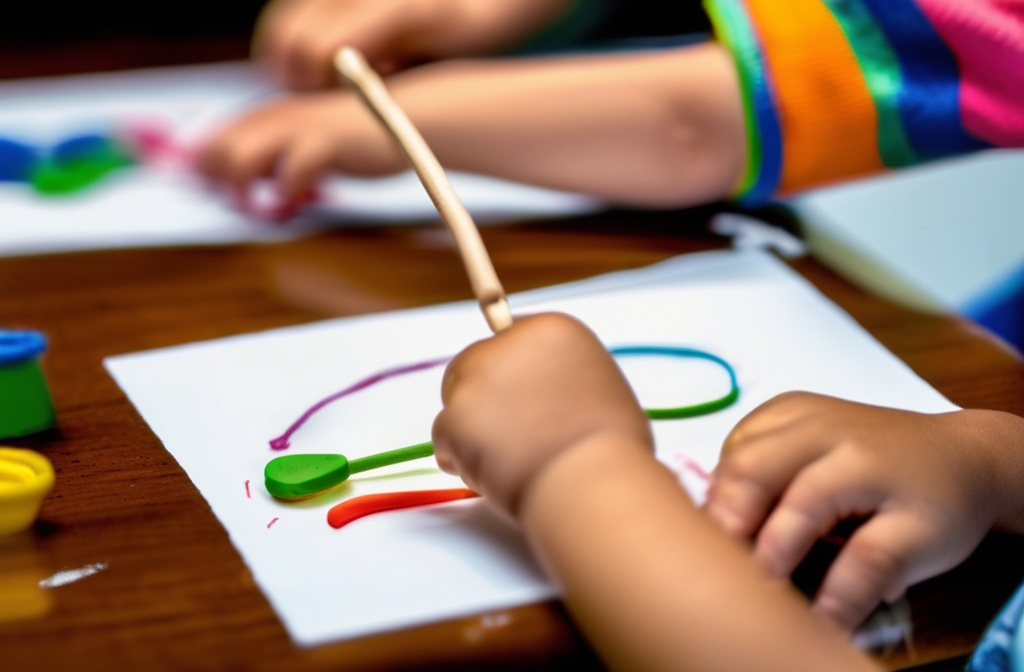
The acquisition of writing is a fascinating process that develops throughout childhood. Preschool children are at a crucial stage in this process, where the foundations for the development of literacy skills are built. In this context, the role of the preschool teacher is fundamental to guide and support students on this path, as well as to identify and prevent possible difficulties such as dysgraphia.
The Acquisition of Writing in Preschool Children
Unlike oral language, which is acquired naturally through interaction with the environment, writing is not an innate skill. Children learn to write through exploration, imitation and exposure to different experiences with written language 1. In the case of preschool children, this learning occurs gradually, through different stages or levels of development2.
Stages of Writing Development
There are different models that describe the stages of writing development. Some of the most relevant are:
Ferreiro and Teberosky Model:2 2
- Presyllabic stage: Children do not yet understand the relationship between writing and oral language. They make scribbles or pseudo-letters without a clear meaning, as if imitating the form of writing without understanding its function.
- Syllabic stage: They begin to relate letters to sounds, but they still do not master the alphabetic principle. They assign a letter to each syllable, for example, they could write "PA" for "dad".
- Syllabic-alphabetic stage: They are in a transition phase, where they mix syllabic writing with alphabetic writing. They could write "PRA" for "pear", combining the syllabic representation with some letters that they identify.
- Alphabetic stage: They understand that each letter represents a sound and are able to combine them to form words. At this stage, writing becomes more conventional, although spelling errors may persist.
Ajuriaguerra Model:3 3
- Post-calligraphic stage: They master writing and write faster. They personalize their handwriting, developing their own style.
- Calligraphic stage: They show greater fluency and mastery of graphics. Writing becomes more legible, with more fluid strokes and better spatial organization.
- Etapa postcaligráfica: Dominan la escritura y escriben con mayor rapidez. Personalizan su caligrafía, desarrollando un estilo propio.
Other models: 4 It is important to bear in mind that these models are only a guide, and that each child has their own learning pace. Some children may progress faster than others, and some may show uneven development in different areas of writing6.
Factors that Influence the Development of Writing
Several factors influence the development of writing in preschool children, including:
- Physiological factors: The maturation of the nervous system, psychomotor development, laterality and hand-eye coordination are fundamental for the development of writing7.
- Intellectual factors: Intelligence, mental abilities, conceptual development and memory capacity influence the ability to understand the writing system and organize ideas in writing8.
- Psychological factors: Family affection, emotional maturity, motivation and self-esteem play an important role in the development of writing. A stimulating family environment and a positive emotional climate favor learning8.
- Environmental factors: Exposure to written language, interaction with adult readers, access to reading and writing materials, such as books, magazines and games, are crucial for the development of writing9.
- Pedagogical factors: Teaching strategies, the type of activities, the classroom climate and the quality of interaction between the teacher and the child influence the learning of writing1.
Levels of Language and Writing
The development of oral language is closely related to the acquisition of writing. The different levels of language, such as phonetic-phonological, morphosyntactic, semantic and pragmatic, contribute to the development of writing skills7.7.
- Phonetic-phonological level: The ability to identify and manipulate the sounds of language is fundamental for writing, as it allows children to relate sounds to letters.
- Morphosyntactic level: Knowledge of grammatical rules and word structure helps children write correct sentences and organize their ideas coherently.
- Semantic level: Understanding the meaning of words is essential for writing, as it allows children to express their ideas accurately.
- Pragmatic level: Knowledge of the rules of language use in different social contexts helps children adapt their writing to different communicative situations.
The Importance of Reading Aloud
Sharing reading experiences with children, reading aloud to them, is essential for the development of writing9. When adults read to children, they show them how writing is used to communicate ideas, tell stories, and express emotions. In addition, they help them understand the connection between letters and sounds, which facilitates the learning of reading and writing.
Writing in Everyday Life
It is important that children see writing as a useful tool in their daily lives. Involving them in everyday activities that involve writing, such as making a shopping list or writing a birthday card, helps them understand the social function of writing and develop their skills11.11.
Writing in the Digital Age
Today, children are exposed to different forms of writing, including digital writing on devices such as tablets and computers. It is important that teachers integrate digital writing into the classroom, offering children the opportunity to experiment with different writing tools and formats12. However, it is essential to maintain a balance between handwriting and digital writing, as handwriting has unique benefits for the development of fine motor skills and memory.
Dysgraphia in Preschool Children
Dysgraphia is a learning disability that affects the ability to write13. It is characterized by difficulties in handwriting, spelling, organizing ideas in writing, and the ability to express ideas clearly and concisely 14. Although some signs of dysgraphia may be observed in the preschool stage, it is important to remember that a formal diagnosis is generally made after 6-7 years of age 15.
Causes of Dysgraphia
The causes of dysgraphia are diverse and may include genetic, neurological, and psychomotor factors16. Some children may have a genetic predisposition to dysgraphia, while others may develop it as a result of a brain injury or developmental disorder.
Symptoms of Dysgraphia
Some of the most common symptoms of dysgraphia in preschool children are: 17 17
- Difficulty holding the pencil or pen correctly.
- Poor posture when writing, such as slouching or over-tensing muscles.
- Fatigue when writing, which can manifest as pain in the hand or arm.
- Difficulty discriminating shapes and spaces between letters, which can lead to confusion between similar letters or messy writing.
- Mixing uppercase and lowercase letters, which makes it difficult to read.
- Constant erasing, due to dissatisfaction with the appearance of the writing.
- Slow and illegible writing, with poorly formed or distorted letters.
- Spelling difficulties, such as omitting letters, inverting them or confusing them.
Types of Dysgraphia
There are different types of dysgraphia, which are classified according to the specific difficulties that the child presents:
- Motor dysgraphia: It is characterized by difficulties in the fine motor coordination necessary for writing. Children with motor dysgraphia may have trouble controlling the pencil, forming letters, and maintaining legible writing. For example, they might have difficulty writing in a straight line or maintaining a uniform letter size.
- Spatial dysgraphia: It is characterized by difficulties in the spatial organization of writing, such as the alignment of letters, the spacing between words and the organization of ideas on paper. Children with spatial dysgraphia may have trouble writing within the margins, spacing words correctly, or organizing their ideas into paragraphs.
- Dyslexic dysgraphia: It is associated with dyslexia, a learning disability that affects reading. Children with dyslexic dysgraphia may have difficulty relating sounds to letters, which affects both reading and writing. They may have trouble spelling words, writing words that sound similar but are spelled differently, or remembering spelling rules.
It is important to note that untreated dysgraphia can have a negative impact on children's academic performance, social image, and self-esteem15. Therefore, early detection and appropriate intervention are crucial to prevent future difficulties in learning to write.
The Importance of the Preschool Teacher
The preschool teacher plays a crucial role in the acquisition of writing and the prevention of dysgraphia18. Their work consists of:
- Creating a literacy environment: Providing an environment rich in experiences with written language, with access to books, writing materials and writing models19. This involves creating a comfortable and well-lit space for writing, with a variety of materials such as pencils, pens, paper, blackboards and magnetic letters11.
- Promoting the development of pre-writing skills: Stimulating fine motor skills, hand-eye coordination, visual and auditory perception, and phonological awareness20. This can be achieved through games and activities that involve manipulating objects, drawing, painting, singing and exploring sounds.
- Teaching writing strategies: Modeling writing, teaching letter formation, stroke and directionality, and guiding the organization of ideas21. The teacher can show children how letters are written, how words are formed and how ideas are organized in a text.
- Detecting possible difficulties: Observing children during writing activities to identify possible signs of dysgraphia or other learning difficulties22. The teacher should be aware of the difficulties that children may have when writing, such as incorrect posture, fatigue, illegible writing or spelling errors.
- Adapting activities to individual needs:: Offering support and adaptations to children who have difficulties in writing23. This may involve providing adapted materials, such as pencil grips or paper with special lines, or adjusting activities to make them more accessible to children with difficulties.
- Working in collaboration with families: Informing families about their children's writing development and offering guidelines to support learning at home22. The teacher can share information about the stages of writing development, the activities that are carried out in the classroom and the strategies that families can use to support learning at home.
Strategies for the Acquisition of Writing and the Prevention of Dysgraphia
The preschool teacher can use various strategies to work with students in the acquisition of writing and the prevention of dysgraphia:
- Fine motor activities: Manipulation games, painting, drawing, modeling, cutting24. These activities help develop the muscles of the hands and fingers, which are necessary to control the pencil and write fluently.
- Phonological awareness activities: Rhyming games, sound identification, word segmentation14. These activities help children become aware of the sounds of language and relate them to letters.
- Graphomotor activities: Tracing letters, copying words, writing names25. These activities help children learn the shape of letters, the directionality of writing and the spatial organization of words.
- Creative writing activities: Inventing stories, writing letters, making lists26. These activities encourage motivation for writing and allow children to express their ideas and creativity.
- Use of adapted materials: Pencil grips, paper with special lines, keyboards25. These materials can make writing easier for children who have difficulties with fine motor skills or spatial organization.
- Explicit teaching strategies: Modeling writing, explaining spelling rules, providing feedback27. Explicit teaching helps children understand the writing system and develop strategies to write correctly.
Synthesis and Conclusions
The acquisition of writing is a fundamental process in the development of preschool children, which lays the foundation for lifelong learning. The preschool teacher has an essential role in this process, by creating a stimulating literacy environment, promoting the development of pre-writing skills, teaching writing strategies and detecting possible difficulties such as dysgraphia.
To carry out this important task, it is essential that the preschool teacher knows the different stages of writing development, the factors that influence this process and the strategies that can be used to support their students. Reading aloud, integrating writing into everyday life and the balanced use of technology are key elements to enrich the learning of writing.
Early detection of dysgraphia and appropriate intervention, which may include classroom adaptations, the use of specific materials and collaboration with families, are crucial to prevent writing difficulties from affecting children's academic, social and emotional development.
Ultimately, collaboration between the teacher, the school and families is essential to ensure optimal development of literacy skills in preschool children, providing them with the necessary tools to become competent readers and writers.
References List
1. Factores que Influyen en el Aprendizaje de la Escritura en los Estudiantes del Grado Primero de la Institución Educativa San, https://repository.uniminuto.edu/bitstream/10656/8329/1/UVDT.EDI_MenaTrellezEdelmira_2016.pdf
2. Niveles de Lectoescritura: Etapas y sus Características, https://didacticaespecializada.com.mx/plataforma/pdf/lectoescritura/Niveles%20de%20Lectoescritura.pdf
3. ▷ Etapas de la escritura: cuáles son y en qué consisten – MiCuento, https://micuento.com/blog/etapas-escritura/
4. Etapas de la escritura: cuáles son y en qué consisten – Euroinnova, https://www.euroinnova.com/blog/latam/etapas-de-la-escritura
5. LAS ETAPAS DE ADQUISICIÓN DE LA ESCRITURA ¿POR QUÉ DEBEMOS CONOCERLAS? – Issuu, https://issuu.com/jhoselynoropeza/docs/estrategias_para_desarrollar_la_fluidez_y_la_compr/s/11687134
6. Habilidades para la escritura a edades diferentes – Understood.org, https://www.understood.org/es-mx/articles/writing-skills-what-to-expect-at-different-ages
7. “Factores que influyen en el proceso de adquisición de habilidades prerrequisitas para la lectoescritura durante la primera i – Biblioteca Digital, https://bibliotecadigital.academia.cl/bitstreams/ff6adfd3-e273-44e5-aba4-0a9989ca77bd/download
8. Factores Que Influyen en El Aprendizaje de La Escritura | PDF – Scribd, https://es.scribd.com/doc/273600645/Factores-Que-Influyen-en-El-Aprendizaje-de-La-Escritura
9. La adquisición de la lectoescritura en el nivel inicial, https://rieoei.org/historico/jano/opinion34.htm
10. DESARROLLO DE LA LECTOESCRITURA, http://www.scielo.org.co/scielo.php?script=sci_arttext&pid=S0123-91552006000100003
11. Cómo ayudar a los niños pequeños a desarrollar destrezas sólidas …, https://www.colorincolorado.org/es/articulo/c%C3%B3mo-ayudar-los-ni%C3%B1os-peque%C3%B1os-desarrollar-destrezas-s%C3%B3lidas-de-escritura
12. Etapas del desarrollo de la escritura: Cómo determinar si su hijo va por buen camino, https://dynamilis.com/es/escritura/ninos/articulos/etapas-desarrollo-escritura-determinar-hijo-buen-camino
13. Disgrafia: MedlinePlus enciclopedia médica, https://medlineplus.gov/spanish/ency/article/001543.htm
14. Dislexia, disgrafia y discalculia: cómo ayudar a los niños con trastornos del aprendizaje a prosperar – HealthyChildren.org, https://www.healthychildren.org/Spanish/health-issues/conditions/learning-disabilities/Paginas/types-of-learning-problems.aspx
15. Disgrafía: Aprende a reconocerla y a tratarla – Editorial SM, https://www.grupo-sm.com/es/disgrafia-diagnostica-orientaciones/
16. Disgrafía: causas, síntomas y tratamientos – INPA, https://inpa.info/disgrafia-causas-sintomas-y-tratamientos
17. Disgrafía que es: Procesos, síntomas, detección y comorbilidades – Neural KIDS, https://neuralkids.es/blog/que-es-la-disgrafia-y-como-podemos-tratarla/
18. ve.scielo.org, http://ve.scielo.org/scielo.php?script=sci_arttext&pid=S1317-58152006000100006#:~:text=El%20ni%C3%B1o%20en%20el%20nivel,en%20lector%20y%20escritor%20efectivo.
19. El aprendizaje de la lectura y escritura en Educación Inicial – SciELO – Scientific Electronic Library Online, https://ve.scielo.org/scielo.php?script=sci_arttext&pid=S1317-58152006000100006
20. “LA IMPORTANCIA DE LA LECTOESCRITURA EN EDUCACIÓN INFANTIL” – CSIF, https://archivos.csif.es/archivos/andalucia/ensenanza/revistas/csicsif/revista/pdf/Numero_14/CARMEN_SANCHEZ_1.pdf
21. Lectura y escritura con sentido y significado – ..::Ministerio de Educación Nacional de Colombia::.., https://www.mineducacion.gov.co/1621/article-122251.html
22. ROL DEL DOCENTE DURANTE EL DESARROLLO DE LA ALFABETIZACIÓN INICIAL EN EL SEGUNDO CICLO DE EDUCACION BASICA REGULAR – Repositorio – UPCH, https://repositorio.upch.edu.pe/bitstream/handle/20.500.12866/9286/Rol_GasparHerrera_Mayra.pdf?sequence=1&isAllowed=y
23. La construcción del rol docente desde una mirada renovadora de la lectura y la escritura, http://www.scielo.org.co/scielo.php?script=sci_arttext&pid=S0121-24942019000200023
24. Estrategias pedagógicas para el desarrollo de la escritura en estudiantes de primaria – SciELO Colombia, http://www.scielo.org.co/pdf/ikala/v27n2/0123-3432-ikala-27-02-547.pdf
25. Adaptaciones en el aula para la disgrafía – Understood.org, https://www.understood.org/es-mx/articles/at-a-glance-classroom-accommodations-for-dysgraphia