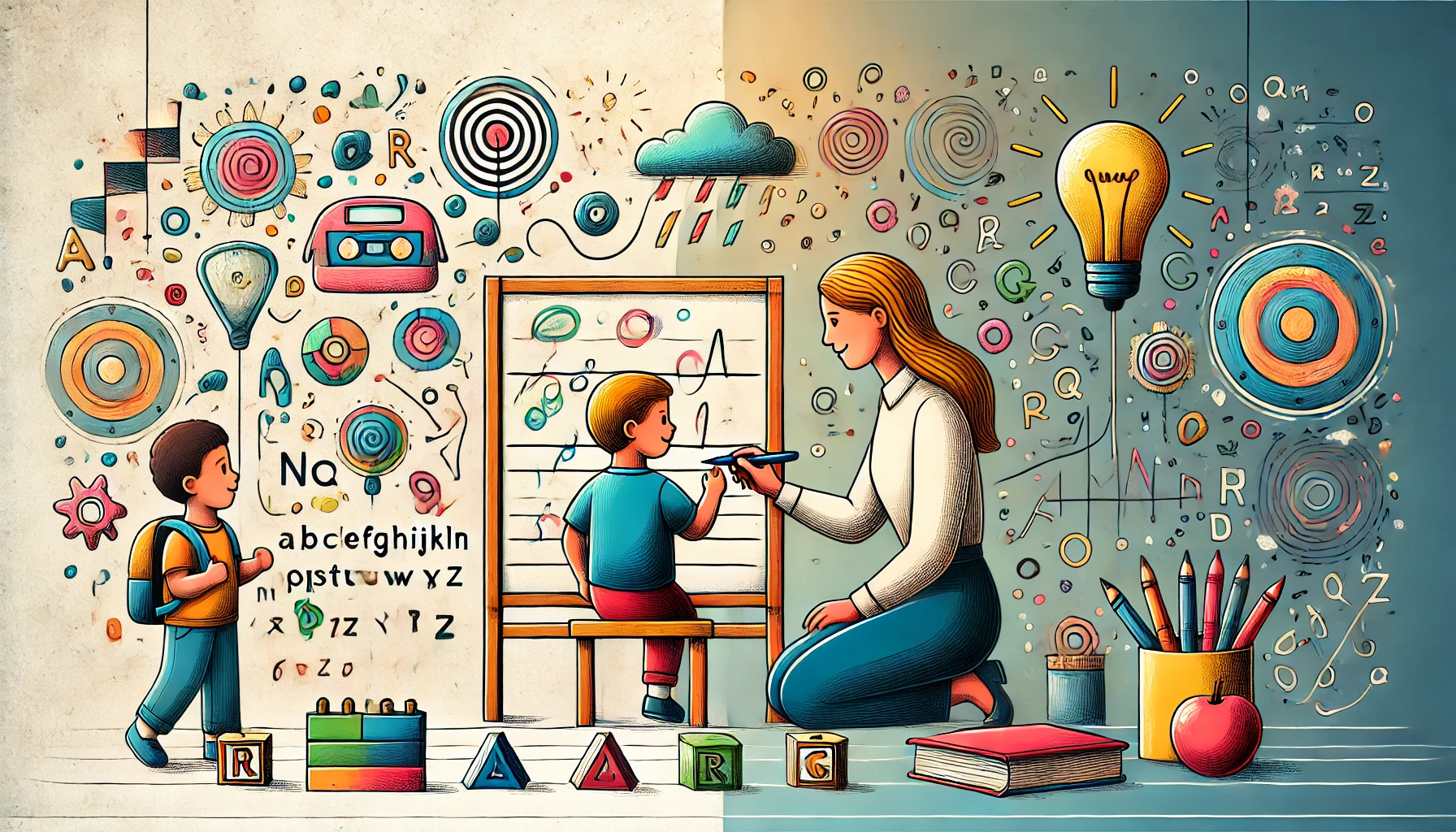
Perceptual-motor development in childhood is a complex process that lays the foundation for learning and the integral development of the child. This process, which involves the integration of sensory information with motor skills, is fundamental for the acquisition of skills such as coordination, balance, laterality, and writing. From a neuroeducational perspective, we understand that this development is not only limited to physical maturation but is intrinsically linked to brain plasticity and the child's interaction with their environment. In this article, we will explore the fundamental role that school and family play in perceptual-motor development, offering practical strategies based on neuroeducation to maximize the potential of each child.
Neuroeducation and Perceptual-Motor Development
Neuroeducation, as a discipline that bridges neuroscience and education, provides us with a deeper understanding of how the brain learns and develops. In the context of perceptual-motor development, neuroeducation reveals the importance of:
- Brain plasticity: The child's brain is highly malleable, which means that early experiences have a significant impact on the formation of neural connections. During early development, there is a rapid increase in brain connections, making childhood a critical stage for perceptual-motor development1. Stimulating the child with enriching experiences at this stage is crucial for optimal development.
- The contemporary CIF Model 2002: This model proposes a holistic approach that includes the child, the activity, the environment, and the family in the intervention process, recognizing the importance of the interaction of these factors in development1.
- Sensory integration: Perceptual-motor development involves the brain's ability to process sensory information from different senses (sight, hearing, touch, etc.) and coordinate it with the motor response2. Through play and exploration, children learn to integrate these sensations and respond appropriately to their environment.
- Experiential learning: Movement and active exploration of the environment are crucial for the development of perceptual-motor skills2. By interacting with the world around them, children develop coordination, balance, and spatial awareness.
- Emotions: An emotionally safe and stimulating environment promotes learning and brain development3. When children feel safe and supported, they are more willing to explore, experiment, and learn.
The Role of the School
The school, as a space for learning and socialization, plays a fundamental role in the child's perceptual-motor development. Research indicates that perceptual-motor skills vary according to age, so it is essential that schools understand these stages of development when designing activities and interventions4. From neuroeducation, strategies are promoted that go beyond traditional activities and focus on:
- Learning through play: Incorporate games that involve movement, exploration, and motor challenges, such as obstacle courses, construction games, manipulation activities, etc5. Play is not only fun, but it is also an effective way to learn and develop perceptual-motor skills.
- Multisensory stimulation: Create learning environments rich in visual, auditory, tactile, and proprioceptive (awareness of the body in space) stimuli. This involves using different materials, textures, sounds, and movements for children to explore and learn with all their senses.
- Active learning: Encourage the active participation of children in the learning process, through experimentation, exploration, and discovery. Instead of being passive recipients of information, children should be protagonists of their own learning.
- Individualized attention: Recognize that each child has a different developmental pace and adapt activities to their individual needs. Observing and understanding the strengths and challenges of each child allows for personalized support that maximizes their potential.
- Creating a positive emotional climate: Promote a safe, stimulating, and stress-free learning environment where children feel motivated to explore and learn. A positive emotional environment fosters confidence, curiosity, and the desire to learn.
- Types of memory: Stimulate different types of memory ("Knowing", "Seeing", "Doing", "Improving") in the classroom6. For example, "Memory: Doing" can be worked on with practical and manipulative activities, while "Memory: Seeing" can be stimulated with the use of images, videos, and other visual resources.
The Role of the Family
The family is the child's first learning environment, and its influence on perceptual-motor development is crucial. Parents and caregivers can apply neuroeducational principles at home through:
- Free and spontaneous play: Allow children to explore their environment, play outdoors, and develop their creativity through movement. Free play allows children to experiment, make decisions, and develop their autonomy.
- Activities of daily living: Involve children in everyday tasks such as cooking, cleaning, dressing, etc., which allow them to develop fine motor skills and coordination. These activities, in addition to being practical, are opportunities to learn and develop important life skills.
- Reading aloud and storytelling: Stimulate imagination and language, which are closely related to perceptual-motor development. Stories and tales not only entertain but also help children understand the world, develop their language, and connect with their emotions.
- Physical contact and affection: Provide hugs, caresses, and physical contact that promote emotional development and security. Physical contact is essential for the emotional and social development of children, as it transmits security, love, and connection.
Tactile Levels, Motor Skills, Laterality, and Writing: Neural Connections
Perceptual-motor development encompasses different interconnected areas, including:
- Tactile levels: The ability to perceive and interpret tactile information is fundamental for exploring the environment, manipulating objects, and developing fine motor skills. Through touch, children learn about the different textures, temperatures, and shapes of objects.
- Motor skills: Refers to the body's ability to move, which is divided into gross motor skills (broad movements such as walking, running, jumping) and fine motor skills (precise movements such as writing, drawing, buttoning)6. The development of motor skills is essential for the child's autonomy and independence.
- Laterality: It is the preference for the use of one side of the body over the other (right-handed or left-handed), which develops in childhood and is related to the hemispheric specialization of the brain. Laterality influences how children interact with the world and perform different tasks.
- Writing: Writing is a complex skill that requires the integration of visual perception, fine motor skills, and hand-eye coordination7. Writing involves a complex coordination process between the brain, eyes, and hands.
These areas are interconnected at the neuronal level, and their development is influenced by the interaction of genetic, environmental, and experiential factors12. Neuroeducation helps us understand these connections and design strategies that promote comprehensive development. For example, studies have shown the importance of motor development in relation to the evolutionary processes of language and cognition8. Motor skills, such as crawling and walking, are not only important for movement but also influence the development of language and cognitive skills. The Jack Capon Measurement Instrument is an example of a tool used to assess perceptual-motor development in children9.
To illustrate the interconnection of these areas, imagine a child building a tower of blocks. The child uses tactile information to feel the shape and size of the blocks, fine motor skills to manipulate them with precision, hand-eye coordination to place them on top of each other, and laterality to prefer one hand over the other when performing the task.
Neuroeducational Implications and Practical Recommendations
Understanding perceptual-motor development from a neuroeducational perspective has important implications for education and parenting. By applying neuroeducational principles in the classroom and at home, we can create rich and stimulating learning environments that promote perceptual-motor development, creativity, and the emotional well-being of children.
| Recommendations for Families and Schools | Examples |
|---|---|
| Encourage outdoor play | Parks, playgrounds, ball games, cycling, exploring nature. |
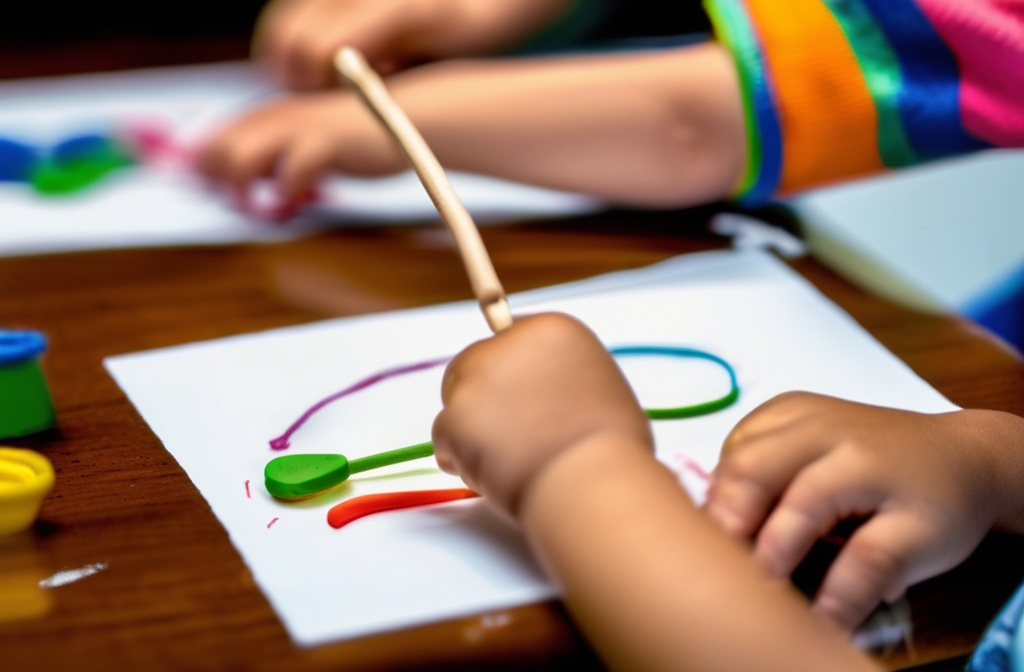
| Provide manipulative materials | Building blocks, puzzles, plasticine, sand, water, finger painting. |
| Carry out activities that involve hand-eye coordination | Draw, paint, cut, thread beads, build with Legos. |
| Stimulate body awareness | Imitation games, yoga for children, dance, movements with music. |
| Create routines and habits | Regular schedules for eating, sleeping, playing, reading; household chores adapted to age. |
| Promote reading and storytelling | Read aloud, tell stories, make up stories, visit libraries. |
| Foster a positive emotional environment | Express love, respect, and support; create a safe and stress-free environment. |
| Limit screen time | Set time limits for the use of electronic devices; encourage alternative activities such as outdoor play, reading, and social interaction. |
Conclusion
Perceptual-motor development is a fundamental process in childhood that lays the foundation for learning and the integral development of the child. School and family play a crucial role in this process, and neuroeducation provides us with tools to understand the neural connections involved and design strategies that maximize the potential of each child.
Research in neuroeducation highlights the importance of brain plasticity in childhood, which means that early experiences have a lasting impact on brain development. Therefore, it is essential to provide children with an environment rich in sensory stimuli, opportunities for movement and exploration, and a positive emotional climate that fosters confidence and learning.
Collaboration between families and schools is essential for optimal perceptual-motor development. By working together, parents and educators can create a consistent and supportive environment that allows children to reach their full potential. By applying neuroeducational principles in the classroom and at home, we can provide children with the tools they need for comprehensive development and a successful future.
References List
1. Avances en Neurociencia aplicado al desarrollo y aprendizaje del movimiento – Asociación Interprofesional de Atención Temprana de Andalucía (ATAI), acceso: enero 12, 2025, https://atenciontemprana-atai.es/ficheros/recursos/42.doc
2. Redalyc. Habilidades motrices en la infancia y su desarrollo desde una educación física animada. Revista Iberoamericana de Edu, acceso: enero 12, 2025, https://www.redalyc.org/pdf/800/80004706.pdf
3. Neuroeducación en infantil, prumeras etapas | EI El Genio, acceso: enero 12, 2025, https://eielgenio.es/neuroeducacion-en-infantil/
4. (PDF) Capacidades perceptivo-motrices en niños de Preescolar y Básica Primaria, acceso: enero 12, 2025, https://www.researchgate.net/publication/375101948_Capacidades_perceptivo-motrices_en_ninos_de_Preescolar_y_Basica_Primaria
5. Desarrollo perceptual, motor y físico – ECLKC – HHS.gov, acceso: enero 12, 2025, https://eclkc.ohs.acf.hhs.gov/es/preparacion-escolar/effective-practice-guides/desarrollo-perceptual-motor-y-fisico
6. Influencia del desarrollo motor en el aprendizaje – NeuroClass, acceso: enero 12, 2025, https://neuro-class.com/influencia-del-desarrollo-motor-en-el-aprendizaje/
7. Importancia del desarrollo motor en relación con los procesos evolutivos del lenguaje y la cognición en niños de 3 a 7 años de la ciudad de Barranquilla (Colombia), acceso: enero 12, 2025, http://www.scielo.org.co/scielo.php?script=sci_arttext&pid=S0120-55522010000100008
8. Facultad de Educación Carrera de Educación Física Desarrollo Perceptivo Motor en niños y niñas de Primero y Segundo Básico – Repositorio UNAB, acceso: enero 12, 2025, https://repositorio.unab.cl/bitstreams/8b1bf3ad-23d3-479b-aa11-64a9e05d7006/download